Tuesday, April 4, 2017

Writing/Language Arts Strategies ( Verb Action)

Writing/Language Arts Strategies
6. Verb Action
- This is away teachers can plan experiences to support students' correct usage. As they see many mistakes being used in the classroom.
-Irregular verbs used in the past tense are often overgeneralized by young children simply by adding "ed" to any verb. 

  • The teacher must observe students and monitor written work to identify verbs that are being misused.
  • Plan active experiences to practice the correct usage of identified words.
  • Document the activity by taking photos of the students as they participate or just keep a log. 
  • Create a chart, bulletin board, or word wall to provide a resource for students.

Ways this could look in the classroom:


Image result for verb action worksheets


Monday, April 3, 2017

Writing/Language Arts Strategies (Multimedia Presentations)

Writing/Language Arts Strategies 
5. Multimedia Presentations
- Involve the use of media such as audio and video equipment, computers, etc.
-Students benefit from multimedia resources because it adds to the context of language in the lessons. 
-Teachers who lack experience in this approach are sometimes overwhelmed with both the possibilities and potential barriers. 

  • The teacher should model media use in the classroom.
  • Introduce media slowly to students.
  • Add new media when appropriate.
  • Allow time for practice.
  • Creating working partners.
  • Make a media assignment for the students to create. 

How it can be used in the classroom:
- Video that explains PowerPoint : https://www.youtube.com/watch?v=tQicwstinOA

Image result for prezi presentation


Image result for classroom presentation


Image result for students working together

Writing/Language Arts Strategies (Learning Strategy Instruction)

Writing/Language Arts Strategies 

4. Learning Strategy Instruction (Acquiring Self-Help Skills)
- This strategy is based on supporting students in understanding their own learning and in monitoring the methods and results of strategies they use in reading, writing, discussions, and research. 
-Student centered Instruction 

  • The teacher should match strategies and curriculum.
  • Reflect on learning task approaches. 
  • Model Strategy use.
  • Practice Strategy Use
  • Discuss it with class.
  • Make visuals for self help.
  • Assess to document strategy use in classroom. 
Ways to incorporate this in the classroom:
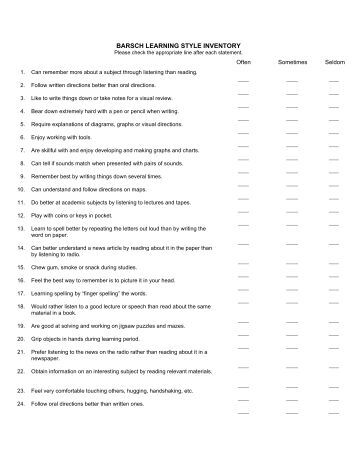
-Learning style quizzes, so the students know how they learn. 
Image result for learning styles test

Image result for learning styles test
-The teacher can have the students fill out questionnaires to find out their progress and thoughts on a topic. 
-Partner Interviews can be used to allow students to communicate with each other and figure out ways they can study, 

Writing/Language Arts Strategies (Microselection)

Writing/Language Arts Strategies
 3. Microselection: 
- Microselection is the ability to find key words in individual sentences. 
-This is a prerequisite for students understanding how to find the main idea in longer reading passages. 
-Using this strategy allows students are better able to to retain the meaning of a reading when they can recall the main idea. 
-Being able to do this allows for an easier process when it comes to paraphrasing and summarizing for the students. 

  • The teacher must introduce the concept of microselection.
  • The teacher must the model the finding of key words.
  • The teacher then must guide the students in practicing microselection.
  • The teacher then should pair the students and allow them to work together. 
  • The teacher should follow up by discussing the acitivty just completed by the students. 
  • Lastly the teacher should assess to identify the need for additional instruction or guided practice. 


HOW IT CAN LOOK AND BE USED IN THE CLASSROOM: 


Image result for reading where keywords are highlighted


Writing/Language Arts Strategies (Language Focus Lessons)

Writing/Language Arts Strategies 

2. Language Focus Lessons
-Emphasize English Vocabulary and usage rather than content. Can be used in many different subject areas.
-The teacher picks the language based off of the area of need of the students in the classroom. 
-With this focused instruction ELL students have a better chance of learning rapidly and achieving higher levels in language proficiency. 


  • The teacher should observe and note language errors.
  • Gather materials needed to teach.
  • Explain and model language usage. 
  • Practice in active mode.
  • Practice for mastery.
  • Assess using observation. 

Ways it can be used in the classroom:

Image result for language focus lessons


Image result for language focus lessons

Writing/Language Arts Standards(Checking for Understanding)


Writing/Language Arts Strategies 
1. Checking for Understanding
- Effective instruction depends heavily on knowing what an individual student understands and different ways to clarify misunderstandings, before teaching new instruction. 
-These checks are vital for English Language Learners.

  • The teacher should plan the format of questions ahead of time.
  • Have activities for all students to respond , which will encourage participation.
  • Maintain visual contact with learners.
  • There needs to be adequate wait time.
  • Pay attention to body language.
  • Reward students for asking questions, which will also encourage participation,
  • Continue to monitor both student understanding and use of questioning strategies in the classroom.

Ways to exemplify this in the Classroom:

Show me Cards: Teacher will provide students with cards that are red, yellow, and green. The students will answer questions by holding up the cards. The questions could be true or false, letters to multiple choice, however the teacher explains it for that set of questions. This gets the students involved and ready to learn. 

Image result for show me cards classroom activity

Link to see how it works in classroom with using Physical Response:https://www.youtube.com/watch?v=fF9qrV7P8tk


Writing/Language Arts Standards

Writing/Language Arts Standards
Florida Educational Standards

5th Grade:
1. LAFS.5.L.3.4 Determine or clarify the meaning of unknown and multiple-meaning words and phrases based on grade 5 reading and content, choosing flexibly from a range of strategies.
  1. Use context (e.g., cause/effect relationships and comparisons in text) as a clue to the meaning of a word or phrase.
  2. Use common, grade-appropriate Greek and Latin affixes and roots as clues to the meaning of a word (e.g., photograph, photosynthesis).
  3. Consult reference materials (e.g., dictionaries, glossaries, thesauruses), both print and digital, to find the pronunciation and determine or clarify the precise meaning of key words and phrases.
6th Grade: 
2. LAFS.6.L.3.5 Demonstrate understanding of figurative language, word relationships, and nuances in word meanings.
  1. Interpret figures of speech (e.g., personification) in context.
  2. Use the relationship between particular words (e.g., cause/effect, part/whole, item/category) to better understand each of the words.
  3. Distinguish among the connotations (associations) of words with similar denotations (definitions) (e.g., stingy, scrimping, economical, unwasteful, thrifty)
7th Grade: 
3. LAFS.68.WHST.2.4 Produce clear and coherent writing in which the development, organization, and style are appropriate to task, purpose, and audience.

8th Grade: 
4. LAFS.8.RI.2.5 Analyze in detail the structure of a specific paragraph in a text, including the role of particular sentences in developing and refining a key concept.

9th Grade
 5. LAFS.1112.RL.1.1 Cite strong and thorough textual evidence to support analysis of what the text says explicitly as well as inferences drawn from the text, including determining where the text leaves matters uncertain.

ESOL Performance Standards

1.1.c. Use range of resources in learning about the cultural experiences of ELL's and their families to guide curriculum development and instruction.

2.2.b Recognize the importance of ELL's home languages and language varieties, and build on these skills as a foundation for learning English.

2.3.e. Understand and apply knowledge of how principles of phonology, morphology, syntax, semantics, and discourse affect L2 reading and writing development. 

3.2.k. Provide instruction that integrates listening, speaking,reading, and writing for ELL's of diverse backgrounds and varying English proficiency levels. 

3.3.b. Use a variety of materials and other resources, including L1 resources, for ELL's to develop language and content area skills.